A few years ago, my wife, a couple of friends, and I went backpacking in Rawah Wilderness in Northern Colorado. Rawah is beautiful, with abundant fish and wildlife. We caught a lot of fish on that trip, and one brook trout was especially plump.
As we walked out, someone saw my fishing gear and asked how the fishing was. I replied, "It was great! I caught one fish that must have been this big (at least a foot).” A bit later, when asked again, I said the fish must have been this big, having grown two inches. The walk out was long, 10 miles, and by the time we got to the parking lot, that fish was two feet long.
I now believe that trout was a state record.
You may not believe me, but we can agree it is less about the fish's size and more about maintaining the opportunities for stories like this. I would love to teach my son how integral wildlife, ecosystems, and habitat are to our existence, and how precious and fleeting life is. I know of no better way to learn these things than through hunting and fishing.
I'm a generalist woodsman or outdoorsman—fishing, hunting, photography, camera trapping, trailing, backcountry navigation, canoeing, and backpacking. If it's in the woods, mountains, or prairie with wildlife around, I'm probably excited about it. Here, I highlight my core pursuits and concerns for anglers and hunters in Colorado. If you are interested in these topics, please reach out.
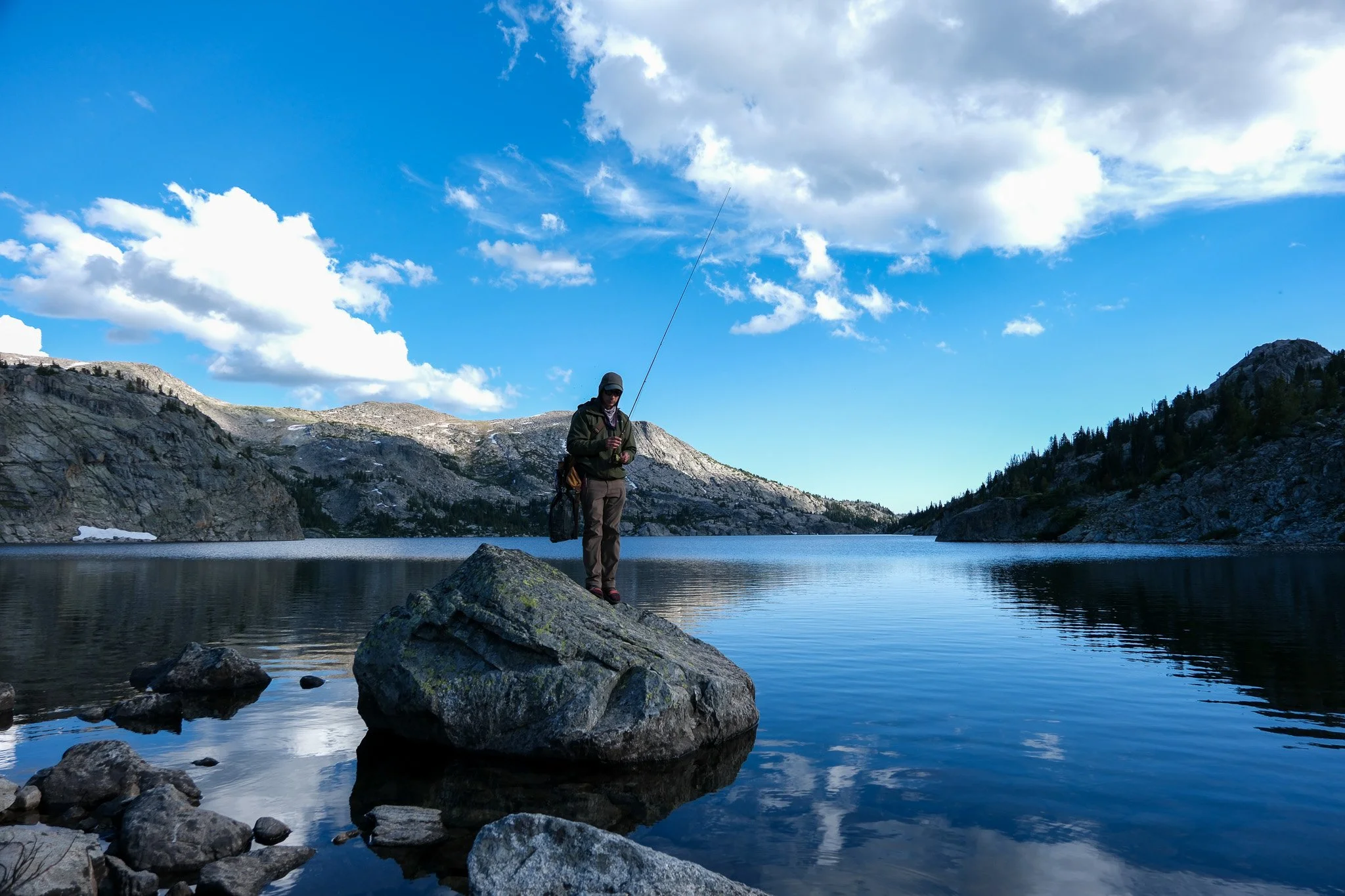
I've been a dedicated fly fisherman for my adult life. I love being in creeks, mountain streams, and alpine lakes. The photo above is from a multi-day trip in the Wind River Wilderness to catch and cook trout.
Fishing connects you with aquatic ecosystems, lets you read and understand water in unique ways, and puts you close to your dinner if you choose to take fish. Anglers are key stewards of western watersheds: funding and implementing stream restoration projects, supporting species management and recovery efforts, advocating for environmental flows, and partnering with state and federal agencies on science-based conservation.
Areas of concern for anglers in Colorado include declining flows driven by drought and diversions, warming water temperatures and associated fish stress, wildfire impacts and post-fire sedimentation, invasive species, whirling disease, and growing pressure from population growth and recreation.
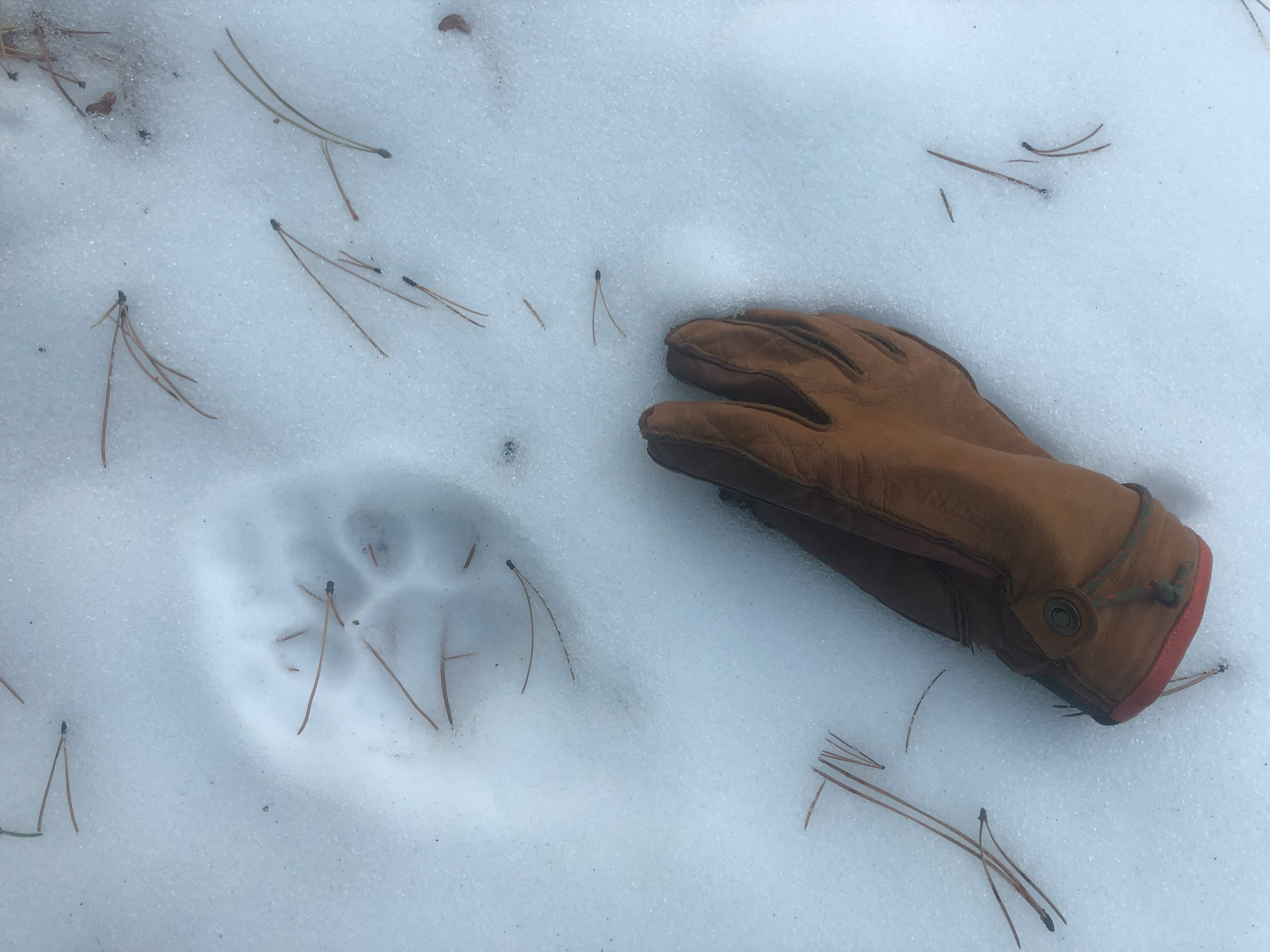
Regarding terrestrial animals, I have long tracked and trailed wildlife in the Colorado mountains. I began with observation and photography, and it has since become part of my hunting. I distinguish between tracking and trailing, along the lines of the distinction made by CyberTracker.org—tracking means reading the signs animals leave: scat, tracks, scrapes, kills, dens, and daybeds. Trailing is following a specific individual animal. These pursuits are fantastic ways to engage with nature and learn about wildlife, and I cannot recommend them enough as disciplines in their own right. Tracking and trailing are also important tools for understanding habitats, corridors, population numbers, and other information needed for conservation.
Over the years, I have increasingly focused on hunting. For the animals I pursue, I learn everything I can about them: habitats, behaviors, signs, forage, natural history, and range. Hunting is my capstone mountain pursuit and a way to connect with wildlife. Like fishing, hunting lets you read and understand the landscape as a living habitat in ways that are hard to grasp through other pursuits. I remember first chasing snowshoe hares and seeing the woods as cover and forage, like a hare (or as something that hunted hares), in a way that felt new to me. I believe that no amount of tracking, trailing, and photography gets to this type of understanding and seeing. Hunting demands respect, discipline, preparation, patience, and a sense of responsibility to conduct clean, ethical hunts and to honor the animal by fully utilizing the harvest.
Harvesting meat through hunting and fishing connects you with what you eat, much like maintaining a garden, foraging, or raising livestock. These activities plug us directly into the life cycle, a rarity in the modern world. I believe this connection fosters an understanding of the land and its limits, supporting good stewardship.
Hunting is a foundation of wildlife conservation in Colorado: it funds conservation through license sales, supports habitat restoration and enhancement projects, and helps monitor species. Hunters often rank among the most ardent defenders of our public lands. Key areas of concern for hunting include habitat fragmentation and loss from development, declining winter range and migration corridor integrity, impacts of drought and climate-driven shifts in forage, chronic wasting disease, access constraints on public and private lands, and rising recreation pressure affecting wildlife distribution.
In 2026, the Governor appointed me to the Colorado Parks and Wildlife (CPW) Commission because of my passion for fishing and hunting, along with my background in agricultural economics and knowledge of Colorado wildlife and habitats. This was a great honor, and I would have loved to serve. Unfortunately, the state senate did not confirm me, given the CPW Commission's current contentiousness. Since then, I have shifted my volunteer focus to conservation organizations. I’m excited to serve as a board member for Boulder’s Chapter of Trout Unlimited and thrilled to redesign their Boulder County fishing map.