A few years ago, my wife, a couple of friends, and I went backpacking in the Rawah Wilderness in Northern Colorado. Rawah is beautiful and has abundant fish and wildlife. We caught a lot of fish on that trip, and one brook trout was especially plump.
Walking out, someone saw my fishing gear and asked how the fishing was. I replied, "It was great! I caught one fish that must have been this big (at least a foot).” A bit later, asked again, I replied that the fish must have been this big, growing two inches. The walk out was long, 10 miles, and by the time we got to the parking lot, that fish was two feet long.
I now believe that trout was a state record.
And while you may not believe that I caught the biggest trout in the state, I’m sure you can believe that I have caught many of the smallest. And we can agree that it is less about the size of the fish and more about maintaining these opportunities for our children and grandchildren, about spending time with those we love, and forming memories.
I would love to teach my son, nieces, nephews, and the next generation how integral wildlife, ecosystems, and habitat are to our existence. How precious and fleeting life is. I know of no better way to learn these things than through hunting and fishing. I dream of fishing for big trout and hunting grouse, turkey, deer, and many of our other abundant species with my family and friends for the rest of my life. These are important cultural traditions, important conservation mechanisms, and they are central to what Colorado is and does.
I'm a generalist outdoorsman—fishing, hunting, photography, camera trapping, trailing, backcountry navigation, canoeing, and backpacking. If it's in the woods, mountains, or prairie with wildlife around, I'm probably excited about it. Here, I highlight my core pursuits and areas of concern for anglers and hunters in Colorado. If you are interested in these topics or other topics, please reach out.
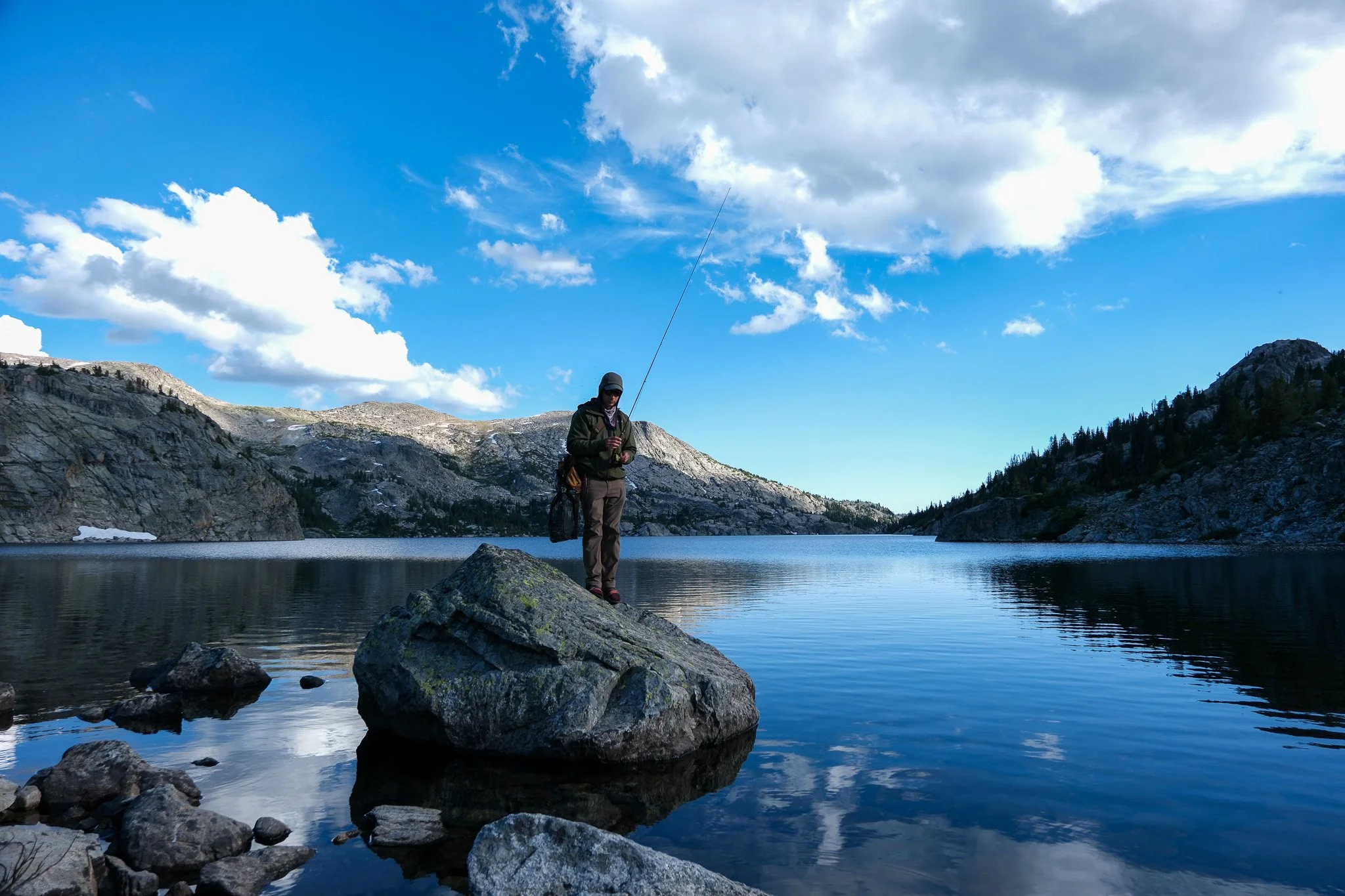
I've been a dedicated fly fisher for my adult life. I love being in creeks, mountain streams, and alpine lakes. The photo above was taken in the Wind River Wilderness during a multiday trip to catch and cook trout.
Fishing puts you in contact with aquatic ecosystems, allows you to read and understand water in unique ways, and puts you in close contact with your dinner if you choose to take some fish. Anglers have been key stewards of western watersheds historically and continue to be today: funding and implementing stream restoration projects, supporting species management and recovery efforts, improving in-stream habitat, advocating for environmental flows, monitoring water quality, and partnering with state and federal agencies on science-based conservation.
Areas of concern for anglers in Colorado include declining flows driven by drought and diversions, warming water temperatures and associated fish stress, wildfire impacts and post-fire sedimentation, invasive species, whirling disease and other pathogens, and growing pressure from population growth and recreation.
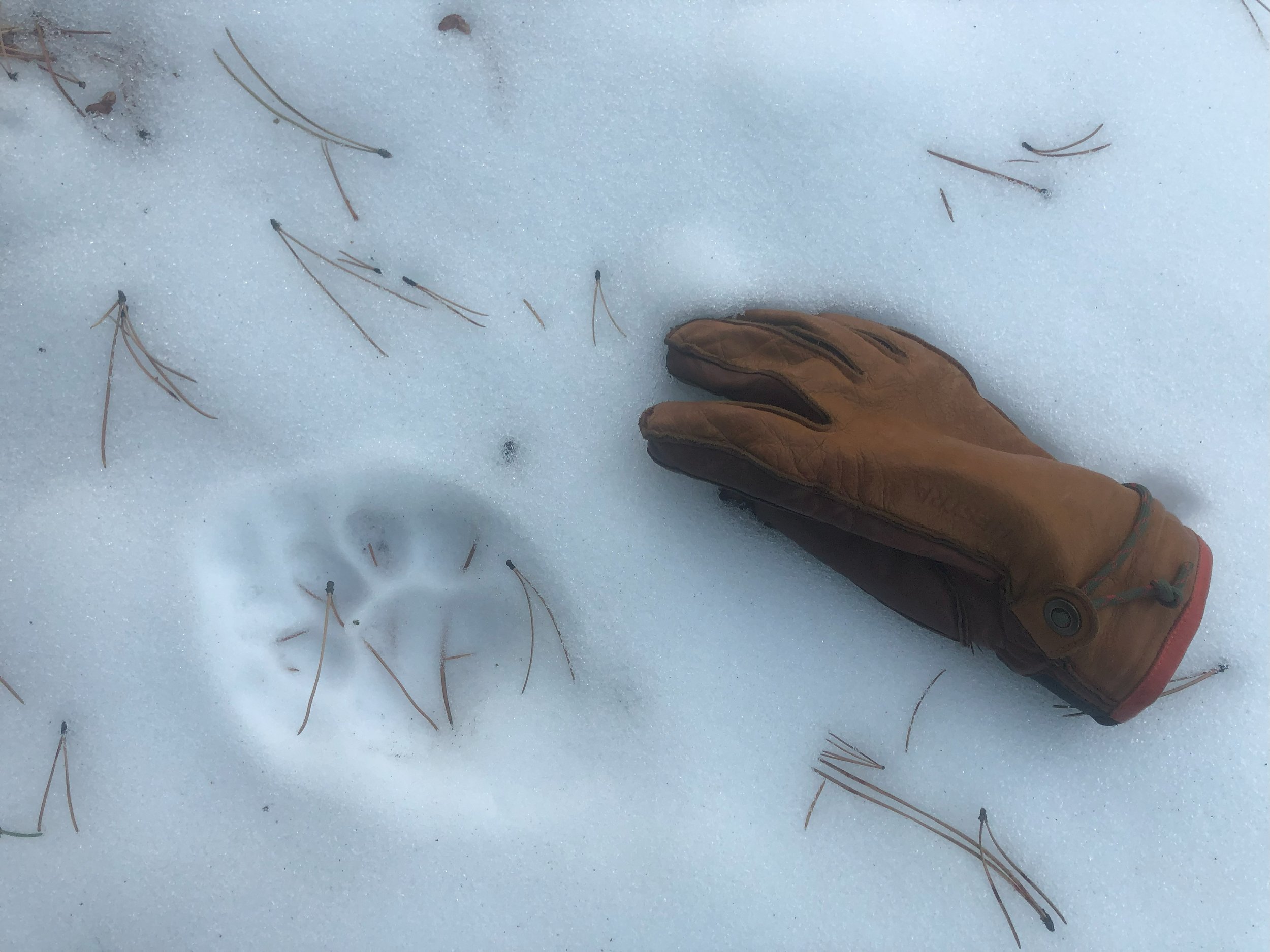
Regarding terrestrial animals, I have long engaged in tracking and trailing wildlife in the Colorado mountains. This began with observation and photography and has evolved into a component of my hunting. I distinguish between tracking and trailing, along the lines of the distinction made by CyberTracker.org—tracking refers to reading the signs left by animals: scat, tracks, scrapes, kills, dens, and daybeds. Trailing is following a specific individual animal. These pursuits are fantastic ways to engage with nature and learn about wildlife, and I cannot recommend them enough as disciplines in their own right. Tracking and trailing are also important tools for understanding habitats, corridors, population numbers, and other information needed for conservation.
Over the years, I have increasingly focused on hunting. For the animals I pursue, I learn everything I can about them: habitats, behaviors, signs, forage, natural history, and range. Hunting is an important pursuit for connecting with wildlife and, like fishing, enables one to read and understand the landscape as a living habitat in ways that are hard to grasp through other pursuits. Hunting demands respect, discipline, preparation, patience, and a sense of responsibility to conduct clean, ethical hunts and to honor the animal by fully utilizing the harvest.
Harvesting meat through hunting and fishing puts you in close connection with what you eat, much like maintaining a garden, foraging, or raising livestock. These activities allow us to plug directly into the process, a rarity in the modern world. That direct connection fosters an understanding of the land and its limits that is essential to good stewardship.
Hunting has been, and continues to be, a foundation of wildlife conservation in Colorado and across North America: funding conservation through license sales and excise taxes (combined fishing and hunting constitute over half of CPW’s annual budget), supporting habitat restoration and enhancement projects, species monitoring, and access programs on public and private lands. Hunters continuously rank among the most ardent defenders of our public lands in the West.
Key areas of concern for hunting in Colorado, include habitat fragmentation and loss from residential development and energy infrastructure, declining winter range and migration corridor integrity for species such as mule deer, elk, and pronghorn, impacts of prolonged drought and climate-driven shifts in forage quality and phenology, increasing wildfire severity and post-fire landscape change, chronic wasting disease prevalence, access constraints on public and private lands, and rising recreation pressure affecting wildlife distribution.
In 2026, I was appointed to the Colorado Parks and Wildlife (CPW) Commission by the Governor, given my passion for fishing and hunting, combined with my background in agricultural economics and knowledge of Colorado wildlife and habitats. This was a great honor, and I would have loved to serve in this role. Unfortunately, I was not confirmed by the state senate, given the current contentiousness of the CPW Commission. Since then, I have shifted my volunteer focus and efforts towards fishing and hunting organizations and am involved with Boulder’s Chapter of Trout Unlimited and Colorado’s Chapter of Backcountry Hunters and Anglers. I am excited to help with the South Boulder Creek Restoration Project and to map mule deer habitat and migration corridors in the Roosevelt National Forest.